
In Texas, the maximum amount of guideline child support is based on a percentage of the maximum amount of monthly net resources, which is currently $9,200 (this amount can increase because of inflation). The percentage that is applied to the net resources is based on the number of children.

Roughly, $12,184 per month of gross income for an employed person results in the maximum net resources of $9,200 for an employed person.
The guideline maximum amount can be exceeded if the judge decides there is proof that the child’s needs exceed the guideline amount, after taking into account the incomes and expenses of both parents. As a practical matter this seldom happens except with very wealthy people.
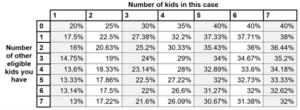
A parent who will pay child support will pay a smaller percentage of his or her net pay if he or she has other children. For example, if Omar has three children involved in a custody case but he has two other children with another woman, he would pay 25.2% of his net resources instead of 30%. To be counted, the “other child” must be a biological child or an adopted child. A step-child does not count for this discount.
“Resources” is money from all sources, including
- Wages; salary, overtime, commissions, tips and bonuses;
- Interest, dividends and royalty income;
- Self-employment income;
- Net rental income (defined as rent received less operating expenses and mortgage payments but not depreciation);
- Retirement benefits and pensions
- Trust income and annuities;
- Capital gains;
- Social security benefits but not supplemental security income (SSI)
- VA disability benefits (but not non-service connected disability pension benefits);
- Unemployment benefits;
- Disability and worker’s compensation benefits;
- Gifts and prizes; and
- Spousal maintenance and alimony.
“Resources” does not include SSI, return on principal or capital, accounts receivable, TANF (food stamps), or payments received for foster care of a child.
For child support purposes, net resources equals all resources received by the noncustodial parent (see list above) minus the following:
- Social Security taxes,
- Income taxes for a single person,
- The cost of health insurance, dental insurance, or cash medical support for the child (if paid by the noncustodial parent),
- Union dues, and
- Non-discretionary retirement contributions if the noncustodial parent does not pay social security taxes.
Net resources for purposes of calculating child support is often not the same as a person’s net income for several reasons. Child support assumes only income taxes for a single person with one exemption is deducted whereas many employees have more than that deducted for taxes. Many people also have other deductions from their paychecks such as 401k contributions. The Texas Attorney General each year issues a tax chart that is used to calculate a person’s net resources.